
[2026-03-29 - Updated for radar changes in alpha 4.7]
In the vast, dynamic universe of Star Citizen, success in combat, exploration, and resource gathering hinges upon one factor: detection. Your ship’s Radar System is your primary tool for perceiving the environment, locating everything from tiny mineral deposits to massive capital ships by processing four fundamental values - collectively known as the signature profile.
Whether you're tracking a fleeting bounty or sweeping for riches in the void, your ship's radar capabilities are the key to a successful mission. This guide will break down what each signature means, how your radar uses it to find targets, and how to interpret your ship's specific detection capabilities.
The signature profile is broken down into four key values: IR (Infrared), EM (Electromagnetic), CS (Cross-Section), and RS (Resource). Understanding the interplay between these values is paramount for effective targeting. For combat pilots, the radar tracks hostile vessels by processing their heat (IR), electronic output (EM), and physical reflection (CS). A high-quality radar efficiently processes these signals, allowing you to detect and lock onto targets over maximum distances.
For explorers and industrial pilots, the RS (Resource Signature) is the beacon of profit. Specialized scanners utilize the RS value to pinpoint and track valuable static objects, guiding you to rich mineable deposits, salvageable wrecks, and hidden cave entrances.
In alpha 4.7 radars are no longer static, "bespoke" ship components. In the latest engineering updates, radars have been transitioned into modular components that players can swap, upgrade, and manage via power distribution. This shift fundamentally changes how combat, stealth, and mining are performed.
Key Changes in alpha 4.7
- Modular Upgrades: Radars can now be purchased at in-game shops (e.g., Omega Pro, Cousin Crow's)
- Power-to-Range Scaling: The range of your Aim Assist and ESP is now determined by the power assigned to the radar, higher power = longer PIP engagement range
- Precision Targeting: Sub-target visibility is now locked behind "Meaningful Assist Range", stronger radars maintain sub-targeting locks at greater distances
- Active Stealth: Cross-section (CS) signatures are no longer passively detected, they only appear via Active Pinging, making stealth builds significantly more viable.
| Signature | Full Name | Primary Role | Meaning & Detection | Control & Primary Source |
| IR | Infrared | Combat/Stealth | Heat Signature. Detects thermal energy radiated by the ship. This is the main signature tracked by heat-seeking missiles and passive sensors. | Source: Heat from Thrusters (especially at high throttle/afterburner), Coolers (venting heat), and heavy component usage. Control: Use Stealth Coolers, reduce throttle, turn on IR Suppression, and minimize weapon/boost usage. |
| EM | Electromagnetic | Combat/Stealth | Electronic Signature. Detects electrical noise and radiation emitted by powered systems. This is the main signature tracked by EM-tracking missiles and advanced sensors. | Source: Electrical output from the Power Plant, Shield Generator, and all active powered components. Control: Use Stealth Power Plants/Shields, reduce power allocation to non-essential systems, and power down specific systems (weapons, Quantum Drive). |
| CS | Cross-Section | Combat/Stealth | Physical Profile. Represents the size and shape of the ship as it reflects radar waves. Used by standard active radar to locate all physical objects. | Source: The physical size and shape of the ship (the "radar profile"). Control: Primarily managed by the ship's design. Pilot Control: Orient your ship to present its smallest profile (usually the nose or tail) directly toward the enemy to minimize the reflected signal. |
| RS | Resource | Exploration/Gathering | Resource Signature. A value used by dedicated scanners to locate and identify specific objects that are not moving ships. | Source: Naturally occurring or structural properties of resource points. Control: This signature is not generated by your ship, but is a value that is scanned for using the ship's dedicated Scan Mode to locate valuable targets. |
The Core of Detection: IR, EM, and CS Targeting
Your ship's radar determines hostile visibility by measuring three critical signature values emitted by the target: IR (Infrared), EM (Electromagnetic), and CS (Cross-Section). The effectiveness of your own installed radar system dictates how efficiently and how far away you can process these signatures to achieve a lock.- Detection Range: Your radar system is designed to lock onto the target's largest signature value - whether that is IR, EM, or CS. For instance, if the target's EM signature is highest, your lock-on distance will be determined by how far your radar can process that specific electronic emission. High-grade (Grade A) and large-size radars will always offer a superior maximum detection range.
- Targeting Priority: Effective combat means recognizing which signature your enemy is emitting most strongly. When initiating a missile lock, your system prioritizes the signature that is easiest to track. Against stealth vessels, your radar must work harder to distinguish their low IR, EM, and CS values from the background noise.
- Mitigating Masking: Your radar's performance can be hindered by the environment. When the target flies near large bodies, gas clouds, or dense terrain, the resulting Environmental Masking adds significant background noise. A better radar helps overcome this signature clutter, allowing you to maintain a lock where cheaper systems would fail.
Power Management & The Aim Assist Formula
In the latest evolution of ship combat systems, the relationship between your ship’s power distribution and its offensive capabilities has been deepened. No longer is power management merely about shield regeneration or thruster performance; it now directly dictates the operational envelope of your targeting computer and Lead/Lag Pips (Predicted Impact Points).
The Mechanics of PIP Generation
The distance at which your targeting computer can calculate and display a reliable firing solution is now a dynamic variable. This "Effective Assist Range" is governed by how much energy you divert to your weapons systems via the Power Management MFD.
The relationship is defined by the following formula: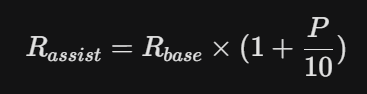
Where:
- R_assist: The final range at which your Aim Assist/Pips become visible and active
- R_base: The factory baseline radar range of your specific ship's sensor suite
- P: The number of "Power Pips" or energy increments assigned to the Weapons triangle
Strategic Impact on Combat
This change transforms the "Weapons" power setting from a simple recharge mechanic into a vital tactical decision for engagement initiation.
1. Low Power Allocation (Defense/Evasion Focus)
When power is diverted to Shields or Engines (P is low), your targeting computer receives less processing priority. For a standard Size 1 radar, this results in pips appearing only when the target is within close-quarters range - typically around 900m. Pilots operating with low weapon power must rely on "dead-reckoning" or wait for the target to close the gap before they can utilize high-precision aim assist.
2. Maximum Power Allocation (Offensive Focus)
By Shunting maximum power to Weapons (P is high), you overcharge the sensor-to-weapon synchronization. This extends the Pip generation range significantly - up to 1300m or more for the same Size 1 unit.
The Advantages of "Long-Range" Pips
Assigning max power to weapons provides two distinct advantages in a dogfight:
- Early Engagement: You can begin putting accurate fire on a target seconds before an opponent who has neglected their power management.
- Reliable Sub-Targeting: The increased processing power at extended ranges allows the computer to isolate specific sub-components (like engines or turrets) with much higher stability, as the "flicker" associated with weak signal processing is eliminated.
Mastering this formula allows pilots to "out-range" their opponents not just with the reach of their guns, but with the superior reach of their ship's intelligence.
Exploration and Gathering (RS)
The RS (Resource Signature) is a dedicated value used exclusively in Star Citizen's scanning and exploration gameplay, entirely separate from combat-based stealth mechanics. This signature is detected by specialized equipment to pinpoint valuable objects like mineable deposits, salvageable wrecks, and hidden environmental features such as unmarked cave entrances.- Mining & Salvage: The RS signature is the lifeblood of these professions. Specialized scanners in ships like the Prospector and Fortune use the RS value to pinpoint and analyze mineable rock deposits and salvageable ship hulls.
- Exploration: The RS signature is also used to detect and track structural anomalies, such as unmarked cave entrances or other environmental points of interest on a planet's surface. The numerical RS value helps the player quickly assess the quality or size of the target being scanned.
The signature system adds depth to nearly every aspect of Star Citizen, requiring pilots to actively manage their equipment and environment whether they are chasing a hostile or hunting for wealth.
Unique Mining Radar Signatures (RS)
Minable deposits has been overhauled with unique RS (Radar Signature) values. Use the table below to identify deposits at a distance without needing a full scan. Note that this will only identify the type of deposit, not the quality of it.
| Resource | RS Value | Resource | RS Value |
|---|---|---|---|
| Quantainium | 3170 | Titanium | 3855 |
| Stileron | 3185 | Tungsten | 3870 |
| Savrilium | 3200 | Agricium | 3885 |
| Ouratite | 3370 | Torite | 3900 |
| Riccite | 3385 | Hephestanite | 4180 |
| Lindinium | 3400 | Tin | 4195 |
| Beryl | 3540 | Quartz | 4210 |
| Taranite | 3555 | Corundum | 4225 |
| Borase | 3570 | Copper | 4240 |
| Gold | 3585 | Silicon | 4255 |
| Bexalite | 3600 | Iron | 4270 |
| Laranite | 3825 | Aluminium | 4285 |
| Aslarite | 3840 | Ice | 4300 |
The Abiliby to Detect: Which Radar is Installed in your Ship
The effectiveness of any vessel in Star Citizen, whether in combat, exploration, or defense, is defined by the quality of its installed Radar System and its ability to process the four fundamental signature types: IR, EM, CS, and RS. These signatures are the raw data your scanner uses to locate everything in the 'verse.
The accompanying table breaks down the default installed Radar System and its inherent efficiency in detecting and utilizing these signatures. While IR, EM, and CS are used to spot hostile ships, RS is the key to finding wealth. A more powerful radar can detect faint signatures over greater distances and process complex signals more efficiently.
Note that you can now also replace the default radar component in your ship with differently specced radars.
Use this table to understand your ship's native detection range and specialized scanning strengths.
How to Read the Table for Detection Capability
- IR, EM, and CS (%): These percentages reflect the sensor's efficiency at tracking those signature types. A high percentage suggests the radar is well-tuned to distinguish and track moving, emitting objects.
- RS (%): This percentage reflects the radar's Resource Scanning Multiplier or efficiency. A high RS percentage indicates the scanner is highly optimized for detecting and interpreting the faint signals from static objects like mineral deposits, salvage hulls, and unmarked cave entrances, making it ideal for gathering professions.
Default Ship Radars:
| Manufacturer | Name | Radar | Radar Manufacturer | Radar Size | Class | Grade | IR | CS | EM | RS |
| Aegis | Avenger Stalker | Ecouter | GNP | 1 | Military | C | 80 % | 80 % | 80 % | 100 % |
| Aegis | Avenger Titan | Ecouter | GNP | 1 | Military | C | 80 % | 80 % | 80 % | 100 % |
| Aegis | Avenger Titan Renegade | Voir | GNP | 1 | Military | D | 80 % | 80 % | 80 % | 100 % |
| Aegis | Avenger Warlock | Ecouter | GNP | 1 | Military | C | 80 % | 80 % | 80 % | 100 % |
| Aegis | Eclipse | Pelerous | Blue Triangle Inc. | 1 | Stealth | A | 80 % | 80 % | 80 % | 100 % |
| Aegis | Gladius | Ecouter | GNP | 1 | Military | C | 80 % | 80 % | 80 % | 100 % |
| Aegis | Gladius Dunlevy | Ecouter | GNP | 1 | Military | C | 80 % | 80 % | 80 % | 100 % |
| Aegis | Gladius Pirate | Voir | GNP | 1 | Military | D | 80 % | 80 % | 80 % | 100 % |
| Aegis | Gladius Valiant | Ecouter | GNP | 1 | Military | C | 80 % | 80 % | 80 % | 100 % |
| Aegis | Hammerhead | Surveyor | Chimera Communications | 2 | Industrial | C | 90 % | 90 % | 90 % | 85 % |
| Aegis | Idris M | RADR_GNRP_S03_Idris | - | 3 | Military | A | 95 % | 100 % | 95 % | 50 % |
| Aegis | Idris P | RADR_GNRP_S03_Idris | - | 3 | Military | A | 95 % | 100 % | 95 % | 50 % |
| Aegis | Reclaimer | Surveyor-Max | Chimera Communications | 3 | Industrial | C | 95 % | 100 % | 95 % | 100 % |
| Aegis | Redeemer | Epier | GNP | 2 | Military | C | 90 % | 90 % | 90 % | 100 % |
| Aegis | Retaliator | Chernykh | WillsOp | 2 | Civilian | C | 90 % | 90 % | 90 % | 100 % |
| Aegis | Sabre | Ecouter | GNP | 1 | Military | C | 80 % | 80 % | 80 % | 100 % |
| Aegis | Sabre Comet | Ecouter | GNP | 1 | Military | C | 80 % | 80 % | 80 % | 100 % |
| Aegis | Sabre Firebird | Ecouter | GNP | 1 | Military | C | 80 % | 80 % | 80 % | 100 % |
| Aegis | Sabre Peregrine | Ecouter | GNP | 1 | Military | C | 80 % | 80 % | 80 % | 100 % |
| Aegis | Sabre Raven | Ecouter | GNP | 1 | Military | C | 80 % | 80 % | 80 % | 100 % |
| Aegis | Vanguard Harbinger | Chernykh | WillsOp | 2 | Civilian | C | 90 % | 90 % | 90 % | 100 % |
| Aegis | Vanguard Hoplite | Chernykh | WillsOp | 2 | Civilian | C | 90 % | 90 % | 90 % | 100 % |
| Aegis | Vanguard Sentinel | Chernykh | WillsOp | 2 | Civilian | C | 90 % | 90 % | 90 % | 100 % |
| Aegis | Vanguard Warden | Chernykh | WillsOp | 2 | Civilian | C | 90 % | 90 % | 90 % | 100 % |
| Anvil | Arrow | Ecouter | GNP | 1 | Military | C | 80 % | 80 % | 80 % | 100 % |
| Anvil | Asgard | Surveyor | Chimera Communications | 2 | Industrial | C | 90 % | 90 % | 90 % | 85 % |
| Anvil | C8 Pisces | Ecouter | GNP | 1 | Military | C | 80 % | 80 % | 80 % | 100 % |
| Anvil | C8R Pisces Rescue | Ecouter | GNP | 1 | Military | C | 80 % | 80 % | 80 % | 100 % |
| Anvil | C8X Pisces Expedition | Ecouter | GNP | 1 | Military | C | 80 % | 80 % | 80 % | 100 % |
| Anvil | Carrack | Surveyor | Chimera Communications | 2 | Industrial | C | 90 % | 90 % | 90 % | 85 % |
| Anvil | F7A Hornet Mk I | Ecouter | GNP | 1 | Military | C | 80 % | 80 % | 80 % | 100 % |
| Anvil | F7A Hornet Mk II | Ecouter | GNP | 1 | Military | C | 80 % | 80 % | 80 % | 100 % |
| Anvil | F7C Hornet Mk I | Ecouter | GNP | 1 | Military | C | 80 % | 80 % | 80 % | 100 % |
| Anvil | F7C Hornet Mk II | Ecouter | GNP | 1 | Military | C | 80 % | 80 % | 80 % | 100 % |
| Anvil | F7C Hornet Wildfire Mk I | Ecouter | GNP | 1 | Military | C | 80 % | 80 % | 80 % | 100 % |
| Anvil | F7C-M Hornet Heartseeker Mk I | Ecouter | GNP | 1 | Military | C | 80 % | 80 % | 80 % | 100 % |
| Anvil | F7C-M Hornet Heartseeker Mk II | Ecouter | GNP | 1 | Military | C | 80 % | 80 % | 80 % | 100 % |
| Anvil | F7C-M Super Hornet Mk I | Ecouter | GNP | 1 | Military | C | 80 % | 80 % | 80 % | 100 % |
| Anvil | F7C-M Super Hornet Mk II | Ecouter | GNP | 1 | Military | C | 80 % | 80 % | 80 % | 100 % |
| Anvil | F7C-R Hornet Tracker Mk I | Ecouter | GNP | 1 | Military | C | 80 % | 80 % | 80 % | 100 % |
| Anvil | F7C-R Hornet Tracker Mk II | Ecouter | GNP | 1 | Military | C | 80 % | 80 % | 80 % | 100 % |
| Anvil | F7C-S Hornet Ghost Mk I | Pelerous | Blue Triangle Inc. | 1 | Stealth | A | 80 % | 80 % | 80 % | 100 % |
| Anvil | F7C-S Hornet Ghost Mk II | Pelerous | Blue Triangle Inc. | 1 | Stealth | A | 80 % | 80 % | 80 % | 100 % |
| Anvil | F8C Lightning | Ecouter | GNP | 1 | Military | C | 80 % | 80 % | 80 % | 100 % |
| Anvil | Gladiator | Ecouter | GNP | 1 | Military | C | 80 % | 80 % | 80 % | 100 % |
| Anvil | Hawk | Capston | WillsOp | 1 | Civilian | C | 80 % | 80 % | 80 % | 100 % |
| Anvil | Hurricane | Ecouter | GNP | 1 | Military | C | 80 % | 80 % | 80 % | 100 % |
| Anvil | Paladin | Epier | GNP | 2 | Military | C | 90 % | 90 % | 90 % | 100 % |
| Anvil | Terrapin | Chernykh | WillsOp | 2 | Civilian | C | 90 % | 90 % | 90 % | 100 % |
| Anvil | Terrapin Medic | Capston | WillsOp | 1 | Civilian | C | 80 % | 80 % | 80 % | 100 % |
| Anvil | Valkyrie | Surveyor | Chimera Communications | 2 | Industrial | C | 90 % | 90 % | 90 % | 85 % |
| Aopoa | Khartu-al | Capston | WillsOp | 1 | Civilian | C | 80 % | 80 % | 80 % | 100 % |
| Aopoa | San'tok.yāi | Ecouter | GNP | 1 | Military | C | 80 % | 80 % | 80 % | 100 % |
| Argo | MOLE | Surveyor | Chimera Communications | 2 | Industrial | C | 90 % | 90 % | 90 % | 85 % |
| Argo | MOTH | Surveyor | Chimera Communications | 2 | Industrial | C | 90 % | 90 % | 90 % | 85 % |
| Argo | MPUV Cargo | Capston | WillsOp | 1 | Civilian | C | 80 % | 80 % | 80 % | 100 % |
| Argo | MPUV Personnel | Capston | WillsOp | 1 | Civilian | C | 80 % | 80 % | 80 % | 100 % |
| Argo | MPUV Tractor | Capston | WillsOp | 1 | Civilian | C | 80 % | 80 % | 80 % | 100 % |
| Argo | RAFT | Ecouter | GNP | 1 | Military | C | 80 % | 80 % | 80 % | 100 % |
| Argo | SRV | Surveyor-Lite | Chimera Communications | 1 | Industrial | C | 80 % | 80 % | 80 % | 80 % |
| Banu | Defender | Ecouter | GNP | 1 | Military | C | 80 % | 80 % | 80 % | 100 % |
| C.O. | Mustang Alpha | Capston | WillsOp | 1 | Civilian | C | 80 % | 80 % | 80 % | 100 % |
| C.O. | Mustang Beta | Capston | WillsOp | 1 | Civilian | C | 80 % | 80 % | 80 % | 100 % |
| C.O. | Mustang Delta | Fleming | WillsOp | 1 | Civilian | D | 80 % | 80 % | 80 % | 100 % |
| C.O. | Mustang Gamma | SNS-R6 | Nav-E7 Gadgets | 1 | Competition | C | 80 % | 80 % | 80 % | 100 % |
| C.O. | Mustang Omega | SNS-R6 | Nav-E7 Gadgets | 1 | Competition | C | 80 % | 80 % | 80 % | 100 % |
| C.O. | Nomad | Ecouter | GNP | 1 | Military | C | 80 % | 80 % | 80 % | 100 % |
| Crusader | A1 Spirit | Surveyor | Chimera Communications | 2 | Industrial | C | 90 % | 90 % | 90 % | 85 % |
| Crusader | A2 Hercules Starlifter | Surveyor | Chimera Communications | 2 | Industrial | C | 90 % | 90 % | 90 % | 85 % |
| Crusader | Ares Star Fighter Inferno | Epier | GNP | 2 | Military | C | 90 % | 90 % | 90 % | 100 % |
| Crusader | Ares Star Fighter Ion | Epier | GNP | 2 | Military | C | 90 % | 90 % | 90 % | 100 % |
| Crusader | C1 Spirit | Surveyor | Chimera Communications | 2 | Industrial | C | 90 % | 90 % | 90 % | 85 % |
| Crusader | C2 Hercules Starlifter | Surveyor | Chimera Communications | 2 | Industrial | C | 90 % | 90 % | 90 % | 85 % |
| Crusader | Intrepid | Ecouter | GNP | 1 | Military | C | 80 % | 80 % | 80 % | 100 % |
| Crusader | M2 Hercules Starlifter | Surveyor | Chimera Communications | 2 | Industrial | C | 90 % | 90 % | 90 % | 85 % |
| Crusader | Mercury Star Runner | Surveyor | Chimera Communications | 2 | Industrial | C | 90 % | 90 % | 90 % | 85 % |
| Drake | Buccaneer | Ecouter | GNP | 1 | Military | C | 80 % | 80 % | 80 % | 100 % |
| Drake | Caterpillar | Chernykh | WillsOp | 2 | Civilian | C | 90 % | 90 % | 90 % | 100 % |
| Drake | Caterpillar Pirate | Chernykh | WillsOp | 2 | Civilian | C | 90 % | 90 % | 90 % | 100 % |
| Drake | Clipper | Fleming | WillsOp | 1 | Civilian | D | 80 % | 80 % | 80 % | 100 % |
| Drake | Corsair | Chernykh | WillsOp | 2 | Civilian | C | 90 % | 90 % | 90 % | 100 % |
| Drake | Cutlass Black | Chernykh | WillsOp | 2 | Civilian | C | 90 % | 90 % | 90 % | 100 % |
| Drake | Cutlass Blue | Surveyor | Chimera Communications | 2 | Industrial | C | 90 % | 90 % | 90 % | 85 % |
| Drake | Cutlass Red | Surveyor | Chimera Communications | 2 | Industrial | C | 90 % | 90 % | 90 % | 85 % |
| Drake | Cutlass Steel | Surveyor | Chimera Communications | 2 | Industrial | C | 90 % | 90 % | 90 % | 85 % |
| Drake | Cutter | Ecouter | GNP | 1 | Military | C | 80 % | 80 % | 80 % | 100 % |
| Drake | Cutter Rambler | Ecouter | GNP | 1 | Military | C | 80 % | 80 % | 80 % | 100 % |
| Drake | Cutter Scout | Surveyor | Chimera Communications | 2 | Industrial | C | 90 % | 90 % | 90 % | 85 % |
| Drake | Golem | Surveyor-Lite | Chimera Communications | 1 | Industrial | C | 80 % | 80 % | 80 % | 80 % |
| Drake | Golem OX | Surveyor-Lite | Chimera Communications | 1 | Industrial | C | 80 % | 80 % | 80 % | 80 % |
| Drake | Herald | Capston | WillsOp | 1 | Civilian | C | 80 % | 80 % | 80 % | 100 % |
| Drake | Vulture | Surveyor-Lite | Chimera Communications | 1 | Industrial | C | 80 % | 80 % | 80 % | 80 % |
| Esperia | Blade | Ecouter | GNP | 1 | Military | C | 80 % | 80 % | 80 % | 100 % |
| Esperia | Glaive | Ecouter | GNP | 1 | Military | C | 80 % | 80 % | 80 % | 100 % |
| Esperia | Prowler | Surveyor-Lite | Chimera Communications | 1 | Industrial | C | 80 % | 80 % | 80 % | 80 % |
| Esperia | Prowler Utility | Surveyor-Lite | Chimera Communications | 1 | Industrial | C | 80 % | 80 % | 80 % | 80 % |
| Esperia | Stinger | Ecouter | GNP | 1 | Military | C | 80 % | 80 % | 80 % | 100 % |
| Esperia | Talon | Pelerous | Blue Triangle Inc. | 1 | Stealth | A | 80 % | 80 % | 80 % | 100 % |
| Esperia | Talon Shrike | Pelerous | Blue Triangle Inc. | 1 | Stealth | A | 80 % | 80 % | 80 % | 100 % |
| Gatac | Syulen | Ecouter | GNP | 1 | Military | C | 80 % | 80 % | 80 % | 100 % |
| Grey's | Shiv | Chernykh | WillsOp | 2 | Civilian | C | 90 % | 90 % | 90 % | 100 % |
| Kruger | L-21 Wolf | Ecouter | GNP | 1 | Military | C | 80 % | 80 % | 80 % | 100 % |
| Kruger | L-22 Alpha Wolf | Ecouter | GNP | 1 | Military | C | 80 % | 80 % | 80 % | 100 % |
| Kruger | P-52 Merlin | Denning | WillsOp | 0 | Civilian | C | 75 % | 50 % | 75 % | 100 % |
| Kruger | P-72 Archimedes | Denning | WillsOp | 0 | Civilian | C | 75 % | 50 % | 75 % | 100 % |
| Mirai | Fury | Ecouter | GNP | 1 | Military | C | 80 % | 80 % | 80 % | 100 % |
| Mirai | Fury LX | Ecouter | GNP | 1 | Military | C | 80 % | 80 % | 80 % | 100 % |
| Mirai | Fury MX | Ecouter | GNP | 1 | Military | C | 80 % | 80 % | 80 % | 100 % |
| Mirai | Guardian | Epier | GNP | 2 | Military | C | 90 % | 90 % | 90 % | 100 % |
| Mirai | Guardian MX | Epier | GNP | 2 | Military | C | 90 % | 90 % | 90 % | 100 % |
| Mirai | Guardian QI | Epier | GNP | 2 | Military | C | 90 % | 90 % | 90 % | 100 % |
| Mirai | Razor | SNS-R6 | Nav-E7 Gadgets | 1 | Competition | C | 80 % | 80 % | 80 % | 100 % |
| Mirai | Razor EX | SNS-R6 | Nav-E7 Gadgets | 1 | Competition | C | 80 % | 80 % | 80 % | 100 % |
| Mirai | Razor LX | SNS-R6 | Nav-E7 Gadgets | 1 | Competition | C | 80 % | 80 % | 80 % | 100 % |
| MISC | Fortune | Surveyor-Lite | Chimera Communications | 1 | Industrial | C | 80 % | 80 % | 80 % | 80 % |
| MISC | Freelancer | Chernykh | WillsOp | 2 | Civilian | C | 90 % | 90 % | 90 % | 100 % |
| MISC | Freelancer DUR | Chernykh | WillsOp | 2 | Civilian | C | 90 % | 90 % | 90 % | 100 % |
| MISC | Freelancer MAX | Chernykh | WillsOp | 2 | Civilian | C | 90 % | 90 % | 90 % | 100 % |
| MISC | Freelancer MIS | Chernykh | WillsOp | 2 | Civilian | C | 90 % | 90 % | 90 % | 100 % |
| MISC | Hull A | Surveyor-Lite | Chimera Communications | 1 | Industrial | C | 80 % | 80 % | 80 % | 80 % |
| MISC | Hull C | Surveyor | Chimera Communications | 2 | Industrial | C | 90 % | 90 % | 90 % | 85 % |
| MISC | Prospector | Surveyor-Lite | Chimera Communications | 1 | Industrial | C | 80 % | 80 % | 80 % | 80 % |
| MISC | Reliant Kore | Capston | WillsOp | 1 | Civilian | C | 80 % | 80 % | 80 % | 100 % |
| MISC | Reliant Mako | Pelerous | Blue Triangle Inc. | 1 | Stealth | A | 80 % | 80 % | 80 % | 100 % |
| MISC | Reliant Sen | Surveyor-Lite | Chimera Communications | 1 | Industrial | C | 80 % | 80 % | 80 % | 80 % |
| MISC | Reliant Tana | Ecouter | GNP | 1 | Military | C | 80 % | 80 % | 80 % | 100 % |
| MISC | Starfarer | Chernykh | WillsOp | 2 | Civilian | C | 90 % | 90 % | 90 % | 100 % |
| MISC | Starfarer Gemini | Chernykh | WillsOp | 2 | Civilian | C | 90 % | 90 % | 90 % | 100 % |
| MISC | Starlancer MAX | Surveyor | Chimera Communications | 2 | Industrial | C | 90 % | 90 % | 90 % | 85 % |
| MISC | Starlancer TAC | Surveyor | Chimera Communications | 2 | Industrial | C | 90 % | 90 % | 90 % | 85 % |
| Origin | 85X Limited | SNS-R6 | Nav-E7 Gadgets | 1 | Competition | C | 80 % | 80 % | 80 % | 100 % |
| Origin | 100i | Ecouter | GNP | 1 | Military | C | 80 % | 80 % | 80 % | 100 % |
| Origin | 125a | Ecouter | GNP | 1 | Military | C | 80 % | 80 % | 80 % | 100 % |
| Origin | 135c | Ecouter | GNP | 1 | Military | C | 80 % | 80 % | 80 % | 100 % |
| Origin | 300i | Capston | WillsOp | 1 | Civilian | C | 80 % | 80 % | 80 % | 100 % |
| Origin | 315p | Capston | WillsOp | 1 | Civilian | C | 80 % | 80 % | 80 % | 100 % |
| Origin | 325a | Ecouter | GNP | 1 | Military | C | 80 % | 80 % | 80 % | 100 % |
| Origin | 350r | SNS-R6 | Nav-E7 Gadgets | 1 | Competition | C | 80 % | 80 % | 80 % | 100 % |
| Origin | 400i | Surveyor | Chimera Communications | 2 | Industrial | C | 90 % | 90 % | 90 % | 85 % |
| Origin | 600i | Capsulo | WillsOp | 3 | Civilian | B | 95 % | 100 % | 95 % | 100 % |
| Origin | 600i Touring | Capsulo | WillsOp | 3 | Civilian | B | 95 % | 100 % | 95 % | 100 % |
| Origin | 890 Jump | BroadSpec-Max | Chimera Communications | 4 | Industrial | B | 95 % | 100 % | 95 % | 100 % |
| Origin | M50 Interceptor | SNS-R6 | Nav-E7 Gadgets | 1 | Competition | C | 80 % | 80 % | 80 % | 100 % |
| RSI | Apollo Medivac | Chernykh | WillsOp | 2 | Civilian | C | 90 % | 90 % | 90 % | 100 % |
| RSI | Apollo Triage | Chernykh | WillsOp | 2 | Civilian | C | 90 % | 90 % | 90 % | 100 % |
| RSI | Aurora CL | Capston | WillsOp | 1 | Civilian | C | 80 % | 80 % | 80 % | 100 % |
| RSI | Aurora ES | Capston | WillsOp | 1 | Civilian | C | 80 % | 80 % | 80 % | 100 % |
| RSI | Aurora LN | Ecouter | GNP | 1 | Military | C | 80 % | 80 % | 80 % | 100 % |
| RSI | Aurora LX | SNS-R6 | Nav-E7 Gadgets | 1 | Competition | C | 80 % | 80 % | 80 % | 100 % |
| RSI | Aurora Mk II | Capston | WillsOp | 1 | Civilian | C | 80 % | 80 % | 80 % | 100 % |
| RSI | Aurora Mk I SE | Ecouter | GNP | 1 | Military | C | 80 % | 80 % | 80 % | 100 % |
| RSI | Aurora MR | Capston | WillsOp | 1 | Civilian | C | 80 % | 80 % | 80 % | 100 % |
| RSI | Constellation Andromeda | Chernykh | WillsOp | 2 | Civilian | C | 90 % | 90 % | 90 % | 100 % |
| RSI | Constellation Aquila | Chernykh | WillsOp | 2 | Civilian | C | 90 % | 90 % | 90 % | 100 % |
| RSI | Constellation Phoenix | Chernykh | WillsOp | 2 | Civilian | C | 90 % | 90 % | 90 % | 100 % |
| RSI | Constellation Taurus | Surveyor | Chimera Communications | 2 | Industrial | C | 90 % | 90 % | 90 % | 85 % |
| RSI | Hermes | Chernykh | WillsOp | 2 | Civilian | C | 90 % | 90 % | 90 % | 100 % |
| RSI | Mantis | Ecouter | GNP | 1 | Military | C | 80 % | 80 % | 80 % | 100 % |
| RSI | Meteor | Ecouter | GNP | 1 | Military | C | 80 % | 80 % | 80 % | 100 % |
| RSI | Perseus | Epier | GNP | 2 | Military | C | 90 % | 90 % | 90 % | 100 % |
| RSI | Polaris | RADR_RSI_S04_Polaris | - | 4 | Military | A | 95 % | 100 % | 95 % | 50 % |
| RSI | Salvation | Ecouter | GNP | 1 | Military | C | 80 % | 80 % | 80 % | 100 % |
| RSI | Scorpius | Observer-Lite | Chimera Communications | 1 | Industrial | D | 80 % | 80 % | 80 % | 60 % |
| RSI | Scorpius Antares | Observer-Lite | Chimera Communications | 1 | Industrial | D | 80 % | 80 % | 80 % | 60 % |
| RSI | Zeus CL | Surveyor | Chimera Communications | 2 | Industrial | C | 90 % | 90 % | 90 % | 85 % |
| RSI | Zeus ES | RADR_WLOP_S03_Lephari | - | 3 | - | A | 95 % | 100 % | 95 % | 50 % |
| Vanduul | Scythe | Ecouter | GNP | 1 | Military | C | 80 % | 80 % | 80 % | 100 % |
Default Ground Vehicle Radars:
| Manufacturer | Name | Radar | Radar Manufacturer | Radar Size | Class | Grade | IR | CS | EM | RS |
| Anvil | Ballista | Prevenir | GNP | 0 | Military | C | 75 % | 50 % | 75 % | 100 % |
| Anvil | Centurion | Prevenir | GNP | 0 | Military | C | 75 % | 50 % | 75 % | 100 % |
| Anvil | Spartan | Sens | GNP | 0 | Military | B | 75 % | 50 % | 75 % | 100 % |
| Aopoa | Nox | Denning | WillsOp | 0 | Civilian | C | 75 % | 50 % | 75 % | 100 % |
| Argo | CSV-SM | Denning | WillsOp | 0 | Civilian | C | 75 % | 50 % | 75 % | 100 % |
| C.O. | HoverQuad | Denning | WillsOp | 0 | Civilian | C | 75 % | 50 % | 75 % | 100 % |
| Drake | Dragonfly | Denning | WillsOp | 0 | Civilian | C | 75 % | 50 % | 75 % | 100 % |
| Drake | Dragonfly Yellowjacket | Denning | WillsOp | 0 | Civilian | C | 75 % | 50 % | 75 % | 100 % |
| Drake | Mule | Denning | WillsOp | 0 | Civilian | C | 75 % | 50 % | 75 % | 100 % |
| Greycat | MDC | Denning | WillsOp | 0 | Civilian | C | 75 % | 50 % | 75 % | 100 % |
| Greycat | MTC | Denning | WillsOp | 0 | Civilian | C | 75 % | 50 % | 75 % | 100 % |
| Greycat | ROC | Surveyor-Go | Chimera Communications | 0 | Industrial | C | 75 % | 50 % | 75 % | 75 % |
| Greycat | ROC-DS | Surveyor-Go | Chimera Communications | 0 | Industrial | C | 75 % | 50 % | 75 % | 75 % |
| Greycat | STV | Denning | WillsOp | 0 | Civilian | C | 75 % | 50 % | 75 % | 100 % |
| Mirai | Pulse | Denning | WillsOp | 0 | Civilian | C | 75 % | 50 % | 75 % | 100 % |
| Mirai | Pulse LX | Denning | WillsOp | 0 | Civilian | C | 75 % | 50 % | 75 % | 100 % |
| Origin | X1 | Denning | WillsOp | 0 | Civilian | C | 75 % | 50 % | 75 % | 100 % |
| Origin | X1 Force | Denning | WillsOp | 0 | Civilian | C | 75 % | 50 % | 75 % | 100 % |
| Origin | X1 Velocity | Denning | WillsOp | 0 | Civilian | C | 75 % | 50 % | 75 % | 100 % |
| RSI | Lynx | Prevenir | GNP | 0 | Military | C | 75 % | 50 % | 75 % | 100 % |
| RSI | Ursa | Prevenir | GNP | 0 | Military | C | 75 % | 50 % | 75 % | 100 % |
| RSI | Ursa Medivac | Prevenir | GNP | 0 | Military | C | 75 % | 50 % | 75 % | 100 % |
| Tumbril | Cyclone | Prevenir | GNP | 0 | Military | C | 75 % | 50 % | 75 % | 100 % |
| Tumbril | Cyclone MT | Prevenir | GNP | 0 | Military | C | 75 % | 50 % | 75 % | 100 % |
| Tumbril | Cyclone RC | Prevenir | GNP | 0 | Military | C | 75 % | 50 % | 75 % | 100 % |
| Tumbril | Cyclone RN | Prevenir | GNP | 0 | Military | C | 75 % | 50 % | 75 % | 100 % |
| Tumbril | Cyclone TR | Prevenir | GNP | 0 | Military | C | 75 % | 50 % | 75 % | 100 % |
| Tumbril | Cyclone AA | Prevenir | GNP | 0 | Military | C | 75 % | 50 % | 75 % | 100 % |
| Tumbril | Nova | Prevenir | GNP | 0 | Military | C | 75 % | 50 % | 75 % | 100 % |
| Tumbril | Storm | Prevenir | GNP | 0 | Military | C | 75 % | 50 % | 75 % | 100 % |
| Tumbril | Storm AA | Prevenir | GNP | 0 | Military | C | 75 % | 50 % | 75 % | 100 % |
Upgrade Your Radar: Purchaseable Radar Components
The following table provides a comprehensive breakdown of the radar components available, detailing their specialized classes, grades, and their specific efficiency ratings for PiP distances, as well as detecting Infrared (IR), Cross-Section (CS), Electromagnetic (EM), and Resource (RS) signatures.
For an overview of where to purchase the various radar components, check the Radar section of the Cornerstone Universal Item Finder.
Purchaseable Radar Components (sorted alphabetically by size):
| Name | Manufacturer | Size | Class | Grade | Aim Assist Min Distance (PiP) | Aim Assist Max Distance (PiP) | IR | CS | EM | RS |
| Agure | GNP | 0 | Military | D | 585 | 643.5 | 75 % | 50 % | 75 % | 100 % |
| BroadSpec-Go | Chimera Communications | 0 | Industrial | B | 585 | 695.8 | 75 % | 50 % | 75 % | 100 % |
| Denning | WillsOp | 0 | Civilian | C | 540 | 632.5 | 75 % | 50 % | 75 % | 100 % |
| Fabian | WillsOp | 0 | Civilian | A | 540 | 759 | 75 % | 50 % | 75 % | 100 % |
| FullSpec-Go | Chimera Communications | 0 | Industrial | A | 585 | 759 | 75 % | 50 % | 75 % | 100 % |
| Observer-Go | Chimera Communications | 0 | Industrial | D | 585 | 569.3 | 75 % | 50 % | 75 % | 100 % |
| Prevenir | GNP | 0 | Military | C | 585 | 715 | 75 % | 50 % | 75 % | 100 % |
| RADR AntiPersonnel Turret | - | 0 | - | A | 630 | 632.5 | 75 % | 50 % | 75 % | 100 % |
| RADR S00 Fake | - | 0 | - | A | 630 | 632.5 | 100 % | 100 % | 100 % | 100 % |
| RADR Unmaned Turret | - | 0 | - | A | 630 | 632.5 | 75 % | 50 % | 75 % | 100 % |
| Sens | GNP | 0 | Military | B | 585 | 786.5 | 75 % | 50 % | 75 % | 100 % |
| Surveyor-Go | Chimera Communications | 0 | Industrial | C | 585 | 632.5 | 75 % | 50 % | 75 % | 75 % |
| V60-26 | GNP | 0 | Military | A | 585 | 858 | 75 % | 50 % | 75 % | 100 % |
| Vogel | WillsOp | 0 | Civilian | B | 540 | 695.8 | 75 % | 50 % | 75 % | 100 % |
| Abetti | WillsOp | 1 | Civilian | A | 780 | 1 173 | 80 % | 80 % | 80 % | 100 % |
| Backlund | WillsOp | 1 | Civilian | B | 780 | 1 075.3 | 80 % | 80 % | 80 % | 100 % |
| Capston | WillsOp | 1 | Civilian | C | 780 | 977.5 | 80 % | 80 % | 80 % | 100 % |
| Ecouter | GNP | 1 | Military | C | 845 | 1 105 | 80 % | 80 % | 80 % | 100 % |
| Fleming | WillsOp | 1 | Civilian | D | 780 | 879.8 | 80 % | 80 % | 80 % | 100 % |
| Hunter | Blue Triangle Inc. | 1 | Stealth | B | 780 | 1 028.5 | 80 % | 80 % | 80 % | 100 % |
| Observer-Lite | Chimera Communications | 1 | Industrial | D | 845 | 879.8 | 80 % | 80 % | 80 % | 60 % |
| Pelerous | Blue Triangle Inc. | 1 | Stealth | A | 780 | 935 | 80 % | 80 % | 80 % | 100 % |
| Prophet | Blue Triangle Inc. | 1 | Stealth | A | 780 | 1 122 | 80 % | 80 % | 80 % | 100 % |
| SNSR5 | Nav-E7 Gadgets | 1 | Competition | D | 780 | 956.3 | 80 % | 80 % | 80 % | 100 % |
| SNS-R6 | Nav-E7 Gadgets | 1 | Competition | C | 780 | 1 062.5 | 80 % | 80 % | 80 % | 100 % |
| SNSR7 | Nav-E7 Gadgets | 1 | Competition | B | 780 | 1 168.8 | 80 % | 80 % | 80 % | 100 % |
| Surveyor-Lite | Chimera Communications | 1 | Industrial | C | 845 | 977.5 | 80 % | 80 % | 80 % | 80 % |
| Tige | GNP | 1 | Military | B | 845 | 1 215.5 | 80 % | 80 % | 80 % | 100 % |
| V801-11 | GNP | 1 | Military | A | 845 | 1 326 | 80 % | 80 % | 80 % | 100 % |
| Voir | GNP | 1 | Military | D | 845 | 994.5 | 80 % | 80 % | 80 % | 100 % |
| Agrippa | WillsOp | 2 | Civilian | A | 1 200 | 1 932 | 90 % | 90 % | 90 % | 100 % |
| Battani | WillsOp | 2 | Civilian | B | 1 200 | 1 771 | 90 % | 90 % | 90 % | 100 % |
| BroadSpec | Chimera Communications | 2 | Industrial | B | 1 300 | 1 771 | 90 % | 90 % | 90 % | 100 % |
| Cassandra | Blue Triangle Inc. | 2 | Stealth | A | 1 200 | 1 848 | 90 % | 90 % | 90 % | 100 % |
| Chernykh | WillsOp | 2 | Civilian | C | 1 200 | 1 610 | 90 % | 90 % | 90 % | 100 % |
| Epier | GNP | 2 | Military | C | 1 300 | 1 820 | 90 % | 90 % | 90 % | 100 % |
| Fawad | WillsOp | 2 | Civilian | D | 1 200 | 1 449 | 90 % | 90 % | 90 % | 100 % |
| FullSpec | Chimera Communications | 2 | Industrial | A | 1 300 | 1 932 | 90 % | 90 % | 90 % | 100 % |
| Observer | Chimera Communications | 2 | Industrial | D | 1 300 | 1 449 | 90 % | 90 % | 90 % | 100 % |
| Predator | Blue Triangle Inc. | 2 | Stealth | B | 1 200 | 1 694 | 90 % | 90 % | 90 % | 100 % |
| Radar | - | 2 | - | A | 1 400 | 1 610 | 100 % | 100 % | 100 % | 100 % |
| Savoir | GNP | 2 | Military | D | 1 300 | 1 638 | 90 % | 90 % | 90 % | 100 % |
| SNS-R5x | Nav-E7 Gadgets | 2 | Competition | D | 1 200 | 1 575 | 90 % | 90 % | 90 % | 100 % |
| SNS-R6x | Nav-E7 Gadgets | 2 | Competition | C | 1 200 | 1 750 | 90 % | 90 % | 90 % | 100 % |
| SNS-R7x | Nav-E7 Gadgets | 2 | Competition | B | 1 200 | 1 925 | 90 % | 90 % | 90 % | 100 % |
| Spyglass | Blue Triangle Inc. | 2 | Stealth | C | 1 200 | 1 540 | 90 % | 90 % | 90 % | 100 % |
| Surveyor | Chimera Communications | 2 | Industrial | C | 1 300 | 1 610 | 90 % | 90 % | 90 % | 85 % |
| V801-12 | GNP | 2 | Military | A | 1 300 | 2 184 | 90 % | 90 % | 90 % | 100 % |
| Vigilance | GNP | 2 | Military | B | 1 300 | 2 002 | 90 % | 90 % | 90 % | 100 % |
| Anysta | WillsOp | 3 | Civilian | A | 1 860 | 3 588 | 95 % | 100 % | 95 % | 100 % |
| BroadSpec | Chimera Communications | 3 | Industrial | B | 2 015 | 3 289 | 95 % | 100 % | 95 % | 100 % |
| Capsulo | WillsOp | 3 | Civilian | B | 1 860 | 3 289 | 95 % | 100 % | 95 % | 100 % |
| Devoue | GNP | 3 | Military | B | 2 015 | 3 718 | 95 % | 100 % | 95 % | 100 % |
| Fidele | GNP | 3 | Military | D | 2 015 | 3 042 | 95 % | 100 % | 95 % | 100 % |
| FullSpec-Max | Chimera Communications | 3 | Industrial | A | 2 015 | 3 588 | 95 % | 100 % | 95 % | 100 % |
| Observer-Max | Chimera Communications | 3 | Industrial | D | 2 015 | 2 691 | 95 % | 100 % | 95 % | 100 % |
| Resolu | GNP | 3 | Military | C | 2 015 | 3 380 | 95 % | 100 % | 95 % | 100 % |
| Socoria | WillsOp | 3 | Civilian | D | 1 860 | 2 691 | 95 % | 100 % | 95 % | 100 % |
| Surveyor-Max | Chimera Communications | 3 | Industrial | C | 2 015 | 2 990 | 95 % | 100 % | 95 % | 100 % |
| V880 | GNP | 3 | Military | A | 2 015 | 4 056 | 95 % | 100 % | 95 % | 100 % |
| BroadSpec-Max | Chimera Communications | 4 | Industrial | B | 3 640 | 5 313 | 95 % | 100 % | 95 % | 100 % |
Final Analysis: Optimized Detection Through Hardware
The data confirms that ship effectiveness is fundamentally tied to its installed radar hardware. Detection and lock-on capability are actively determined by the radar's efficiency in processing the target’s highest signature value (IR, EM, or CS), in addition to the amount of power you feed into the radar component.For industrial and exploration roles, prioritizing high-grade, dedicated resource scanners like the Surveyor is key. Its superior efficiency rating allows it to successfully isolate the subtle RS signatures from ambient void noise, ensuring maximum range and precision when searching for salvage or deposits.
By utilizing the detailed specifications presented in this page, pilots can make informed decisions to optimize their ship radar components for maximum mission effectiveness, whether that means prioritizing stealth or achieving superior detection and resource acquisition capability.